

The EU AI Act is no longer an abstract piece of regulation waiting somewhere in the future. It is beginning to change the AI products that people use at work, including outside the European Union.
Anthropic has told Claude users that supported models will add a machine-readable watermark to generated text. In its email, the company is explicit about the reason:
“We apply the watermark to comply with the EU AI Act's transparency requirements for AI-generated content, which apply to every major AI provider serving the EU.”
That sentence matters. We are not saying the EU AI Act is UK law, or that every UK organisation has the same legal duties as an EU-based business. We are saying something more immediate: an EU transparency rule has caused a major AI provider to alter its product globally, and UK businesses using Claude will experience that change.
This is regulation reaching the product layer.
What is Anthropic changing?
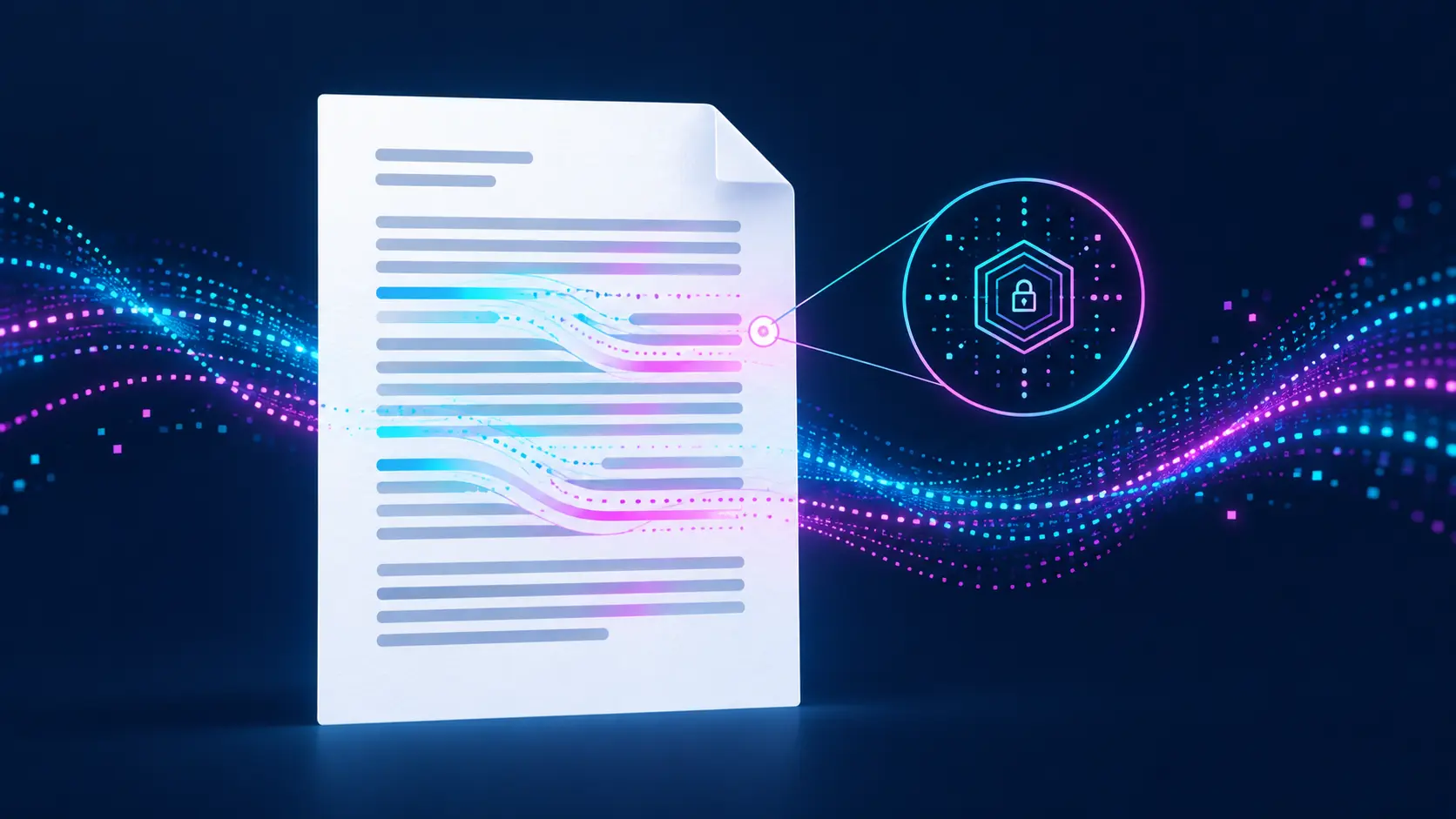
Anthropic says future supported Claude models will mark AI-generated text using an imperceptible, machine-readable watermark. Supported files generated by Claude will use Content Credentials based on the C2PA standard.
The text marker is not a visible label stamped across a document. Anthropic says it is created through statistical patterns in the language generated by the model. It is not made from hidden characters, does not identify the individual user or organisation, and should not add extra tokens or meaningful cost.
The company also says the system is being applied globally. Its explanation is practical: content can be created in one country and shared in another, so a durable regional boundary is difficult to enforce.
In other words, UK teams do not need to be operating in the EU for their Claude-generated content to be affected.
Why is the EU AI Act driving this?
Article 50 of the EU AI Act introduces transparency obligations for certain AI-generated and AI-manipulated content. The relevant obligations become applicable from 2 August 2026.
The European Commission is also developing a voluntary Code of Practice on marking and labelling AI-generated content to help providers and deployers prepare.
There are two important layers:
- Provider responsibilities. AI providers need technical ways to mark outputs in a machine-readable format.
- Deployer responsibilities. In some circumstances, organisations using AI may still need to disclose that content was generated or manipulated by AI.
The first does not automatically satisfy the second. The European Commission's guidance makes clear that provider-side marking and deployer-side disclosure are separate questions.
For a UK business, the exact legal position will depend on where it operates, who it serves and how the content is used. But the operational effect is already broader than the legal boundary because providers are changing globally distributed products.
What a watermark can tell you
A reliable machine-readable marker could make AI provenance easier to detect at scale. That may help platforms, publishers and organisations distinguish some AI-generated material from unmarked content.
It could also support audit trails and more consistent handling of AI-generated documents, particularly where content moves across teams and systems.
However, a watermark is a signal, not a complete governance system.
It may indicate that Claude was involved in generating content. It does not tell you:
- whether confidential or personal data was entered into the tool
- whether the person using it was authorised to do so
- whether the output is accurate, fair or safe
- whether a human reviewed and approved it
- whether the content needs a visible disclosure
- whether it is suitable for the audience or purpose
- whether another model or a human substantially altered it later
There is also an important limitation: editing, translation, paraphrasing or combining outputs may weaken the ability to detect a statistical text marker. Organisations should not treat watermark detection as proof that all unmarked material is human-written.
What should UK organisations do now?
The practical response is not to ban AI or wait for a regulator to provide a perfect checklist. It is to make responsible use understandable and repeatable.
Start with five actions.
1. Know where AI is being used
Create a proportionate register of approved tools and higher-risk use cases. You do not need to record every prompt, but you should understand where AI influences customer communications, decisions, learning content, recruitment, compliance or sensitive data.
2. Define when disclosure is needed
Decide when an internal note is sufficient and when customers, learners or the public should be told that AI helped create or alter content. Do not assume an invisible technical marker replaces a clear human-facing disclosure.
3. Set data boundaries
Make it explicit what staff may and may not enter into AI tools. Cover personal data, client information, commercially sensitive material and intellectual property.
4. Keep human accountability
Name the person responsible for checking an output before it is used. AI can accelerate a task, but accountability should not disappear into the tool.
5. Train people for real situations
A policy stored on an intranet is rarely enough. Staff need practical examples, short scenarios and confidence about when to stop, check or escalate.

The bigger lesson for leaders
The most significant part of Anthropic's announcement is not the technical watermark itself. It is the evidence that regulation in one major market can alter the default behaviour of a global AI product.
This will happen again. Providers will adapt interfaces, disclosures, safeguards and data practices as regulation develops. UK organisations will inherit some of those changes whether or not the underlying law applies to every part of their operation.
That makes AI literacy a business capability, not a one-off compliance exercise. Teams need enough understanding to interpret product changes, ask sensible questions and update working practices without creating panic or paralysis.
Alistair's Take
This is a useful moment because it makes AI governance tangible.
The conversation is no longer only about what future regulation might require. A tool used by millions is changing now, explicitly because of the EU AI Act, and that change will be visible to UK businesses using Claude.
The watermark may help with provenance, but it will not decide whether an AI use is appropriate. It cannot replace judgement, review, data discipline or clear accountability. Those are organisational skills.
The best response is to turn responsible AI from a legal memo into everyday practice: clear rules, realistic examples, confident staff and evidence that the process is actually being followed.
Make responsible AI practical
Neon AI Ready helps organisations build clear AI policies, practical staff capability and evidence-led governance around the tools people already use.